The Thailand semiconductor strategy put forward by the Federation of Thai Industries (FTI) in October 2026 centres on building a domestic market for semiconductors as the lever for attracting advanced-technology investment. For anyone buying or supplying electronic-grade chemicals in Southeast Asia, it is a demand signal to plan around rather than react to: every new wafer fab, packaging line or test facility brings a long qualification cycle for high-purity inputs, and the sourcing decisions that matter are made well before the first wafer runs.
This is a different development from the investment and materials targets covered in our September analysis of Thailand's semiconductor plans. That piece looked at capital commitments. This one looks at the FTI's demand-side approach and what it means for procurement timing.
What the FTI's Thailand semiconductor strategy proposes
The FTI's position, as reported, is that investment follows demand: if Thailand builds a domestic market for semiconductors — local industries designing in and buying locally made chips and components — it becomes a more credible destination for advanced-technology investors. The strategy sits alongside the Board of Investment (BOI) incentive framework and the Eastern Economic Corridor (EEC), where Thailand already has decades of electronics assembly and test activity.
The direction of travel is from assembly toward deeper parts of the value chain: design, materials and, potentially, front-end fabrication at smaller scale. It mirrors a regional push to diversify a global semiconductor supply chain that still leans heavily on Taiwan and mainland China.
Why a semiconductor strategy is a chemical supply story
When a country commits to building semiconductor capacity, three things tend to move together:
- Incentives — tax and land terms for foreign investors.
- Localisation pressure — investors and governments want supporting supply chains nearby: process chemicals, industrial gases, packaging materials.
- Tighter incoming quality control — semiconductor processes are sensitive to contamination at parts-per-billion levels, so chemical specifications, documentation and lot-to-lot consistency all get stricter.
The chemical inputs are specific: high-purity etchants and acids, wet-process cleaning chemicals such as electronic-grade hydrogen peroxide and isopropyl alcohol, photoresists and ancillary solvents, and process gases. Each needs to be qualified by the fab before it can be used, and qualification is slow and expensive to repeat. Changing a supplier mid-ramp is something fabs try hard to avoid.
Impact by buyer segment
- Semiconductor fabs and OSAT (assembly and test) operators: direct demand for high-purity chemicals with trace-metal control rises in step with new capacity coming online.
- PCB and component makers: benefit from a broader supply ecosystem, but may compete with larger fabs for etching chemicals and cleaning solvents when demand concentrates.
- Chemical distributors and importers in Thailand: need to assess clean, controlled storage and the ability to hold buffer stock, because semiconductor demand follows investment cycles rather than the steadier pattern of food or cosmetics.
- Manufacturers in Vietnam and Indonesia: should read Thailand's progress as a regional indicator. If investment lands quickly, competition for the same electronic-grade supply rises across the region, lengthening lead times for neighbouring plants.
Three ways the strategy could play out
| Scenario | Policy and investment path | Effect on electronic-grade chemical demand | What buyers should do |
|---|---|---|---|
| Slow rollout | Incentives approved, fab investment delayed | Modest growth, mainly from existing OSAT expansion | Keep current supply; review periodically |
| Base case | Some new fab/OSAT projects licensed and built over the next 2–3 years | Gradual rise in high-purity demand, with stricter consistency requirements | Start qualifying a second source and check suppliers' storage capability |
| Accelerated | Several fabs announced and built in parallel | Sharp competition for regional supply | Secure VMI or long-term stock commitments early |
The planning gap: strategy to working fab line
The time between a national strategy and a running fab line is measured in years. That is long enough to build sourcing redundancy, and short enough that waiting until ground is broken is already late. Electronic-grade materials carry tighter purity specifications and longer qualification cycles than industrial grades, so the practical work — mapping origins, auditing storage and handling, agreeing documentation — has to start while the investment is still on paper.
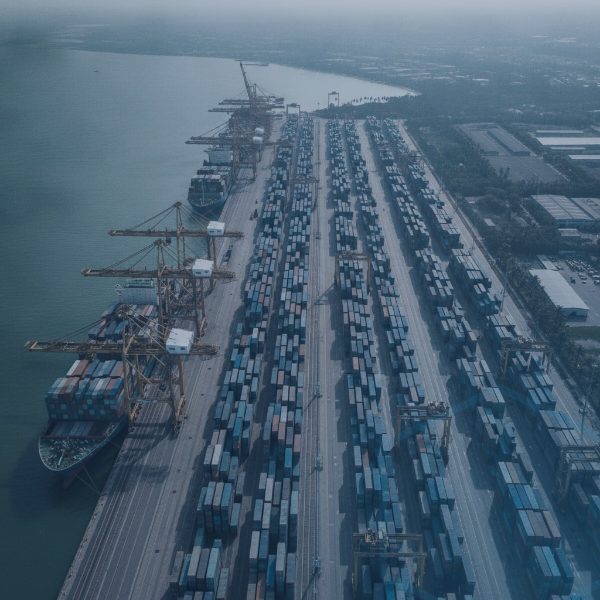
Logistics belongs in the same plan. Many wet-process chemicals are liquids imported in ISO-tanks or IBCs, and a qualified material is only useful if it arrives on schedule and in specification. A second qualified source on a different origin and a different transport channel is worth more than two suppliers who share the same port, the same tank operator and the same lead time.
Monitoring checklist for procurement and R&D teams
- Follow BOI approvals related to semiconductors and electronic materials.
- Track EEC projects that involve front-end fabrication, not only assembly and test.
- Review the specifications of the chemicals you buy today — particularly trace-metal limits — before signing long-term supply contracts.
- Map multi-origin options for each critical input, combining local and imported supply.
- Confirm your supplier's storage conditions, lot traceability and certificate-of-analysis practice meet the standard a fab customer will audit.
- Open a VMI conversation early if your volumes are expected to rise with the investment timeline.
Frequently asked questions
What is Thailand's semiconductor strategy?
It is a policy direction promoted by the Federation of Thai Industries to build a domestic semiconductor market and attract advanced-technology investment, working with BOI incentives and existing EEC infrastructure.
Will it increase demand for electronic-grade chemicals in Thailand?
Likely, but at the pace investment actually lands. Demand grows as new fab and OSAT capacity comes online, not on the day a strategy is announced.
How long does it take to qualify a new electronic-grade chemical supplier?
Longer than for industrial grades. Fabs test samples and production lots against their own specifications and documentation requirements, which is why switching suppliers mid-ramp is costly and why second sources are best qualified early.
What should a procurement team do now?
Review current specifications, check your suppliers' storage and documentation against fab expectations, and start mapping a backup source before demand tightens.
How DIC helps
DIC tracks Thai industrial policy that could affect chemical supply for electronics manufacturers and adjacent industries across the region. An isolated, tightly controlled warehouse originally built for pharma-grade materials, and an IBC drum channel that runs alongside ISO-tank logistics rather than depending on a few tank operators, give manufacturers more room to hold buffer stock while regional demand shifts. If you are planning supply for an expansion tied to Thailand's semiconductor build-out, talk to the DIC team through the contact form.