Thailand's food manufacturing sector operates some of the most advanced, high-throughput plants in Southeast Asia — yet raw material supply risk remains the single biggest threat to keeping those lines running at rated capacity. The paradox isn't about technology or scale; it's about what happens upstream, long before a shipment reaches the factory gate, and it is reshaping how procurement teams plan sourcing for 2026 and beyond.
Why world-class plants still carry raw material supply risk
A recent industry analysis published by thestandard.co looked at exactly this contradiction: Thai food factories that meet international certification standards, run modern automated lines, and export to demanding markets, still periodically idle production because a single functional ingredient — a stabiliser, an acidulant, a specific grade of starch or preservative — didn't arrive on schedule. The lesson isn't that Thai manufacturing is behind. It's that manufacturing capability and supply reliability are two separate problems, and investing in the first does nothing to solve the second.
Modern food formulations are chemically precise. A beverage, sauce, or snack recipe is often locked to a specific supplier's grade of an ingredient — a particular mesh size, viscosity profile, or purity spec — because reformulating around a substitute means re-running stability and shelf-life trials that can take weeks. That precision, which is a strength for product consistency, becomes a liability the moment the usual import channel for that exact grade is delayed, reallocated, or paused upstream.
The mechanism: where the shortage actually originates
Raw material supply risk for Thai manufacturers rarely starts in Thailand. It typically originates in one of three places:
- Feedstock and production constraints at origin — many functional food ingredients (hydrocolloids, amino acids, specialty acids, vitamins) are manufactured at a limited number of plants globally, concentrated in China and a handful of other countries. A maintenance shutdown, environmental enforcement action, or feedstock price spike at one of those plants ripples through every buyer downstream, including Thailand.
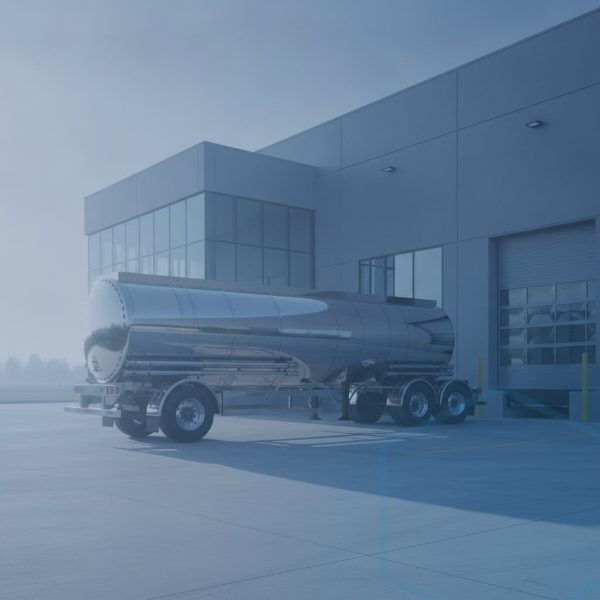
- Logistics bottlenecks between origin and Thai port — chemical and ingredient freight into Southeast Asia often moves via ISO-tank or bulk container allocations that are controlled by a small number of logistics operators. When tank availability tightens, smaller-volume buyers are the first to be bumped down the queue, regardless of how reliable their own production planning is.
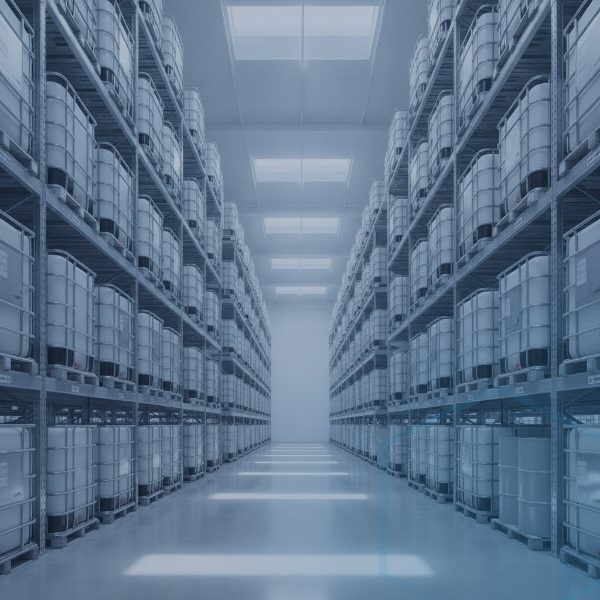
- Thin domestic buffer stock — many manufacturers, especially mid-sized ones, order close to just-in-time to manage working capital. That keeps inventory costs low in normal conditions but leaves zero slack when an upstream disruption adds even two or three weeks to a shipment's arrival.
None of these three causes is visible on a factory floor. A plant can be running world-class quality systems and still be exposed to all three simultaneously — which is precisely the lesson the Thai food industry analysis draws out.
Segment by segment: who feels raw material supply risk first
The exposure isn't uniform across industries that depend on imported functional ingredients:
- Food & beverage manufacturers are often the most exposed because formulations are reformulation-sensitive and consumer-facing shelf-life claims are fixed. A delayed stabiliser or preservative batch can stall an entire production run, not just slow it.
- Personal care manufacturers face a milder version of the same risk — surfactants, emollients, and actives sourced from a narrow supplier base, with reformulation constrained by stability and regulatory filing requirements.
- Pharmaceutical and supplement producers carry the highest stakes per unit of disruption: an excipient or active sourced to a specific pharmacopoeia grade cannot simply be swapped for an off-spec batch, and qualification of a new supplier can take months.
- Pet nutrition manufacturers increasingly mirror human food and supplement supply chains, with similar exposure to vitamin and amino-acid premix shortages.
- Electronics and semiconductor manufacturers face an adjacent version of the same structural problem — electronic-grade chemicals sourced from a concentrated supplier base, where even a short logistics delay can stall a production schedule built around tight just-in-time inventory.
Three sourcing postures, compared
| Sourcing posture | Typical buffer | Exposure to raw material supply risk | Working capital impact |
|---|---|---|---|
| Single-origin, just-in-time ordering | 1–2 weeks | High — one disruption stalls production | Lowest |
| Multi-origin sourcing, no formal buffer program | 2–4 weeks, informal | Moderate — some resilience, but reactive | Moderate |
| Vendor-managed inventory (VMI) with agreed buffer levels | Set by contract, continuously replenished | Low — disruptions absorbed before they reach the line | Optimised — capital sits with the supply partner, not idle on the buyer's balance sheet |
A practical monitoring and action checklist
Procurement and QA teams can reduce exposure to raw material supply risk without over-ordering, by building a routine around these checks:
- Map which SKUs are single-sourced to one origin country or one plant, and flag them for priority monitoring.
- Track reported production and logistics disruptions at the country/region level for your top five imported ingredients, not just price movements.
- Request documented lead-time ranges (not point estimates) from suppliers, and compare against actual delivery performance quarterly.
- For formulation-critical, hard-to-reformulate ingredients, evaluate a VMI or consignment-stock arrangement rather than relying solely on safety stock sized by guesswork.
- Pre-qualify a second grade or second origin for your highest-risk ingredients before a disruption forces an emergency substitution under time pressure.
FAQ
Why do modern, certified factories still run short of raw materials?
Because certification and automation address production quality and consistency, not the separate problem of whether a specific imported ingredient arrives on schedule. Raw material supply risk sits upstream, in feedstock availability and freight allocation, areas a factory's own operations cannot control directly.
What's the difference between a production bottleneck and a supply risk?
A production bottleneck is an internal capacity constraint — a line, a machine, a labour shift. Supply risk is external: the ingredient simply isn't available to feed the line at all, regardless of how much internal capacity exists.
How can manufacturers reduce exposure without tying up cash in excess inventory?
By shifting from self-held safety stock to structured buffer arrangements — such as VMI — where a supply partner holds qualified stock close to the point of need and replenishes against agreed trigger levels, rather than the manufacturer carrying the full working-capital cost of a large on-site buffer.
How DIC supports this
Diamond Interchem works with manufacturers across Thailand and the wider region to reduce exactly this category of exposure. Our VMI programs are built around agreed buffer levels for formulation-critical ingredients, so a disruption upstream is absorbed before it reaches a customer's production line. Our isolated pharma-grade warehouse keeps sensitive-grade materials segregated and traceable, and our IBC drum logistics channel gives us a path into Thailand that isn't dependent on the same ISO-tank allocation queues that concentrate risk for smaller-volume buyers. If raw material supply risk is a live concern for one of your formulation-critical ingredients, our team is glad to walk through where a buffer-stock or VMI arrangement could fit — reach out through our contact form to start that conversation.